
Thanksgiving 2026: A Thank You to Amazon Sellers and the Decisions Behind Every Sale
 By 8 min read
Behind every Amazon order is a seller making decisions that customers rarely see. Someone researched the product, compared suppliers, calculated costs, prepared inventory, reviewed advertising performance, and took a financial risk before that item reached a buyer.
This Thanksgiving 2026, we want to recognize the people doing that work.
To the new sellers learning how Amazon FBA works, the wholesale businesses reviewing supplier catalogs, and the experienced sellers managing daily costs and inventory, thank you for the effort you put into building your businesses.
Thanksgiving is also a good opportunity to reflect on the decisions that matter most as the holiday shopping season continues and another year comes to an end.
Thank You to the Sellers Behind Every Amazon Product
Running an Amazon business involves much more than finding a product and listing it for sale.
Sellers spend time comparing purchase prices, checking product demand, understanding Amazon fees, evaluating competition, and deciding whether an opportunity is worth pursuing. Even after a product goes live, the work continues through pricing changes, advertising decisions, inventory management, and customer expectations.
For many small sellers, those responsibilities are handled by one person or a small team.
That effort deserves recognition.
We appreciate the sellers who take product research seriously, ask difficult questions before investing, and look for practical ways to improve their businesses. We also recognize the people who support them, including suppliers, logistics partners, developers, and the communities where sellers share their experiences.
Every responsible purchasing decision, carefully reviewed cost, and improved workflow contributes to building a more sustainable business.
What Amazon Sellers Have Taught Us About Better Decisions
One of the most important lessons in Amazon selling is that sales revenue and profitability are not the same thing.
A product can generate orders while leaving little profit after supplier costs, fulfillment fees, shipping, advertising, and returns. A high-demand product can also become difficult to manage when competition increases or inventory costs rise.
For sellers, the important questions are often practical:
- Can I afford to purchase this inventory?
- How much profit remains after all expected costs?
- What happens if my selling price drops?
- Am I spending too much on advertising?
- Should I reorder this product or invest in another opportunity?
These questions matter throughout the year, but they become particularly important during busy shopping periods.
They also remind us why clear calculations, understandable reports, and honest estimates are valuable. Good software should make decisions easier to evaluate, not simply display more numbers.
Five Practical Things Amazon Sellers Can Review This Thanksgiving
Thanksgiving arrives near two major shopping events, Black Friday and Cyber Monday. For sellers already managing active listings, this is a useful time to review current performance and avoid unnecessary financial surprises.
The following checks can help sellers protect their margins and prepare for the final weeks of 2026.
1. Review Profit After Discounts and Advertising
A holiday promotion can attract customers without necessarily improving profitability.
For example, imagine a product sells for $30 and has $20 in total expected costs before advertising. Its estimated profit is $10.
If the seller offers a $3 discount and spends another $2 on advertising per sale, the remaining estimated profit falls to $5, assuming the other costs stay unchanged.
That is a significant difference.
Before continuing a promotion, review the selling price, product cost, fulfillment expenses, advertising costs, and any additional charges.
An Amazon FBA fee calculator can help estimate fulfillment and referral fees. These estimates should still be checked against current Seller Central information.
The goal is not simply to generate more orders. It is to understand what each sale contributes to the business.
2. Check Holiday Fulfillment and Storage Costs
Amazon sellers should review the fulfillment charges that apply during the holiday period.
For 2026, Amazon has confirmed that holiday peak fulfillment fees apply from October 15, 2026, through January 14, 2027, across the specified fulfillment programs.
These charges can affect the profitability of products sold during the peak season, particularly when margins are already narrow.
Review Amazon's official 2026 holiday fulfillment guidance and check the applicable rates for your products.
Storage is another cost worth reviewing.
Products that remain in fulfillment centers longer than expected continue to tie up cash and may generate additional storage expenses. Use a storage fee estimator to understand the potential cost of holding inventory, then verify actual charges through Amazon.
A short review now can help prevent incorrect assumptions from affecting December and January profitability.
3. Identify Inventory That Needs Attention
Holiday inventory decisions are not always about buying more stock.
Some products may be selling faster than expected, while others may be moving slowly. Sellers should review available inventory, recent sales, supplier lead times, and the money required for their next purchase.
At this stage of the holiday season, the focus should be on monitoring existing stock and making realistic decisions about replenishment.
Amazon's own guidance also emphasizes the importance of managing inventory and preparing for busy shopping periods.
For sellers with multiple SKUs, reviewing inventory one product at a time can make it easier to identify where cash is being tied up and which items deserve further attention.
The right decision may be to reorder, reduce an intended purchase, or hold off until demand becomes clearer.
4. Review PPC Spending Before Increasing Budgets
Advertising can help products gain visibility, but increased spending does not automatically produce better financial results.
Amazon sellers should review their advertising reports to identify search terms that generate clicks without enough sales, campaigns with increasing costs, and products with limited room for additional advertising expenses.
A useful review connects advertising performance with product profitability.
For example, a campaign may have acceptable advertising metrics while the product itself generates a small profit after fulfillment and purchase costs.
Reviewing Amazon PPC search term analysis alongside profit estimates can help sellers decide where additional spending may be justified and where changes deserve consideration.
Before changing campaign budgets, make sure you understand the effect on the product's expected net profit.
5. Prepare Better Purchasing Decisions for 2027
Thanksgiving is also a useful point to begin looking beyond the current holiday season.
As 2026 comes to an end, sellers can review which products were worth purchasing, which supplier costs changed, and where inventory or advertising decisions created financial pressure.
If you plan to expand your catalog, it is worth checking the cash required before placing another large supplier order.
A product investment calculator can help organize the expected costs of sourcing and launching inventory.
You may also want to reconsider how products are fulfilled. An FBA vs FBM calculator can help compare estimated costs when choosing between Amazon fulfillment and merchant fulfillment.
The purpose of this review is simple: enter the new year with a clearer understanding of where your money is going.
A Simple Year-End Review for Amazon Sellers
You do not need an extensive report to start reviewing your business. A few carefully selected figures can reveal important questions.
| Area | What to review | Decision to consider |
|---|---|---|
| Profitability | Selling price, supplier costs, fees, and net profit | Which products still meet your targets? |
| Inventory | Stock levels, sales activity, and supplier lead times | What should you reorder or avoid overstocking? |
| Advertising | Search terms, spend, conversions, and profitability | Where should you adjust spending? |
| Sourcing | Supplier prices, freight, and minimum order quantities | Which purchasing opportunities remain attractive? |
| Cash planning | Inventory investment and expected expenses | How much can you comfortably invest next? |
These checks are especially useful for smaller Amazon businesses that need to make purchasing and advertising decisions with limited time and resources.
An organized review also makes it easier to identify questions that need more research before money is committed.
Why Your Decisions Matter to What We Build
At FBAZone, our focus is helping Amazon sellers evaluate products, understand costs, and make clearer purchasing decisions.
The platform brings together Amazon profitability calculators, ASIN analysis, supplier catalog tools, PPC report analysis, and inventory planning calculations. Sellers can work with figures they enter themselves, available ASIN information, or supported spreadsheet uploads without connecting their Seller Central account.
The purpose is not to replace the seller's judgment. It is to make the numbers behind important decisions easier to examine.
We value the questions, feedback, and practical challenges that sellers bring to this work. Clear explanations, transparent assumptions, and useful tools should remain central to how seller software is developed and improved.
Thank You to the Teams and Communities Supporting Amazon Sellers
Amazon businesses are rarely built through individual effort alone.
Suppliers, fulfillment partners, software teams, support staff, and other people contribute to the daily work involved in bringing products to customers.
We are grateful for the wider seller community, including those who share knowledge, help newcomers understand common challenges, and encourage more informed decisions.
We also appreciate the engineers, designers, product specialists, and support teams who work on making business tools more useful.
Thanksgiving is a reminder that progress is not only measured in revenue or completed orders. It also comes from the work, cooperation, and thoughtful decisions that make a business stronger over time.
Frequently Asked Questions
What should Amazon sellers review during Thanksgiving week?
Amazon sellers should review current profitability, inventory availability, fulfillment fees, advertising performance, and active promotions.
These checks help identify potential financial or operational problems during the holiday shopping period. Sellers should also confirm relevant deadlines and requirements directly in Seller Central.
How do storage fees affect Amazon FBA profit margins?
Amazon FBA storage fees reduce the profit remaining after a sale and can make slow-moving inventory more expensive to hold.
Sellers should include relevant storage expenses in profitability calculations and monitor how long products remain in inventory.
How do returns and refunds affect Amazon FBA profit calculations?
Returns and refunds can reduce net profit through refunded revenue, processing-related expenses, damaged inventory, and other applicable costs.
The actual financial effect depends on the product and Amazon's policies. Sellers should use realistic return assumptions instead of treating every sale as a completed, fully profitable transaction.
How can Amazon sellers prepare for year-end inventory purchases?
Amazon sellers can prepare by reviewing recent sales, current inventory, supplier prices, expected fees, and the cash required for new orders.
Before increasing stock, calculate the potential return and assess whether the business can afford the inventory if sales move more slowly than expected.
Looking Ahead With Appreciation
As Thanksgiving 2026 arrives, we want to thank the Amazon sellers who continue putting thought and effort into their businesses.
Whether you are evaluating your first product, managing a growing catalog, or reviewing another supplier offer, the decisions you make deserve careful consideration.
We hope the remainder of the year brings useful lessons, clearer financial decisions, and opportunities to build a stronger business.
From our team to the Amazon seller community, Happy Thanksgiving 2026.
If you're reviewing product costs or planning your next purchase, explore FBAZone's Amazon seller tools and start with the numbers that matter to your business.
Know the numbers before you spend the money
FBAZone works out real profit after every Amazon fee, scores products and scans supplier lists — from a CSV, an ASIN or numbers you type in. No Seller Central connection needed.
- Free plan, no credit card
- No seller account linking
About the author
Amazon FBA Seller Tools, Product Research & Profitability Analysis
Ethan Mitchell writes about Amazon FBA selling, product profitability, wholesale sourcing, PPC optimization, and inventory planning. His articles focus on practical seller challenges, helping new and experienced Amazon sellers understand costs, evaluate product opportunities, improve advertising decisions, and make informed sourcing and inventory decisions using data-driven tools.
Related articles
All articles →
Thanksgiving 2026: A Thank You to the Amazon Sellers Behind Every Order
This Thanksgiving 2026, we're thanking Amazon sellers and sharing practical tips for reviewing FBA costs, inventory, profits, and year end plans.
Read More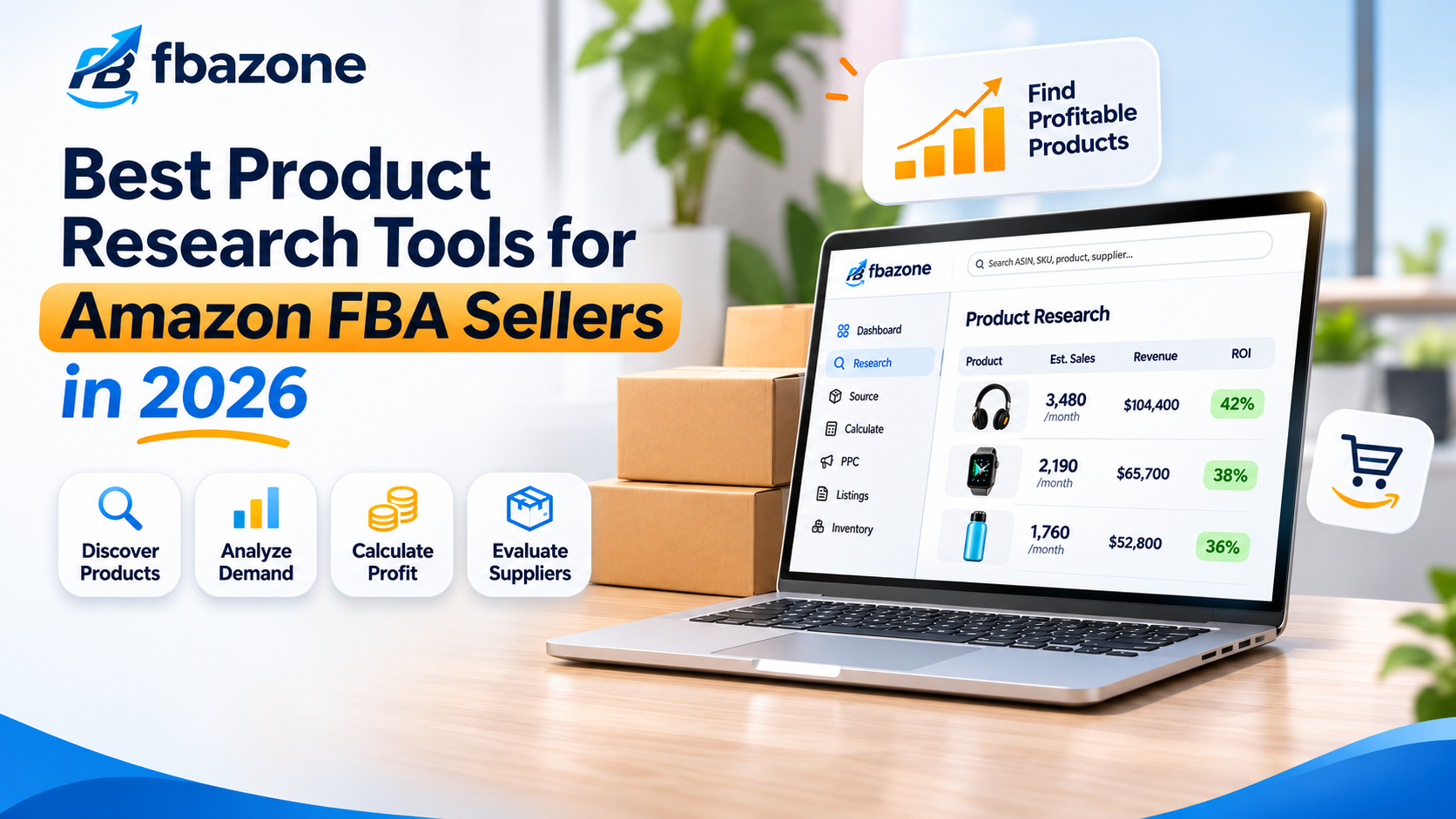
Best Product Research Tools for Amazon FBA Sellers in 2026
Compare the best Amazon product research tools for 2026. Explore product discovery, demand analysis, profit calculations, and sourcing features.
Read More